Common Hearing problems
Overview
my partner sounds muffled to me!
You may not be the first one to find hearing issues, your partner may notice them first when you are talking or watching TV.
I don’t bother going out, I cannot hear what my friends talking about.
Do you find it hard to hear in background noise? Do you need more repeats from your mates or friends when you gather at the club? Background noise may talking and understanding a lot harder.
Every night when I go to bed, I hear a buzz that keeps me awake.
People with tinnitus iften describe them as a buzz or ringing sound in their ears.This can happen on one or both ears. Most people find tinnitus more obvious at night when it is quiet around.
Are these situations happening on you now?
If you feel the same, you may need some help on your hearing. Contact us to have a comprehensive check about your hearing, and we will find a solution together.
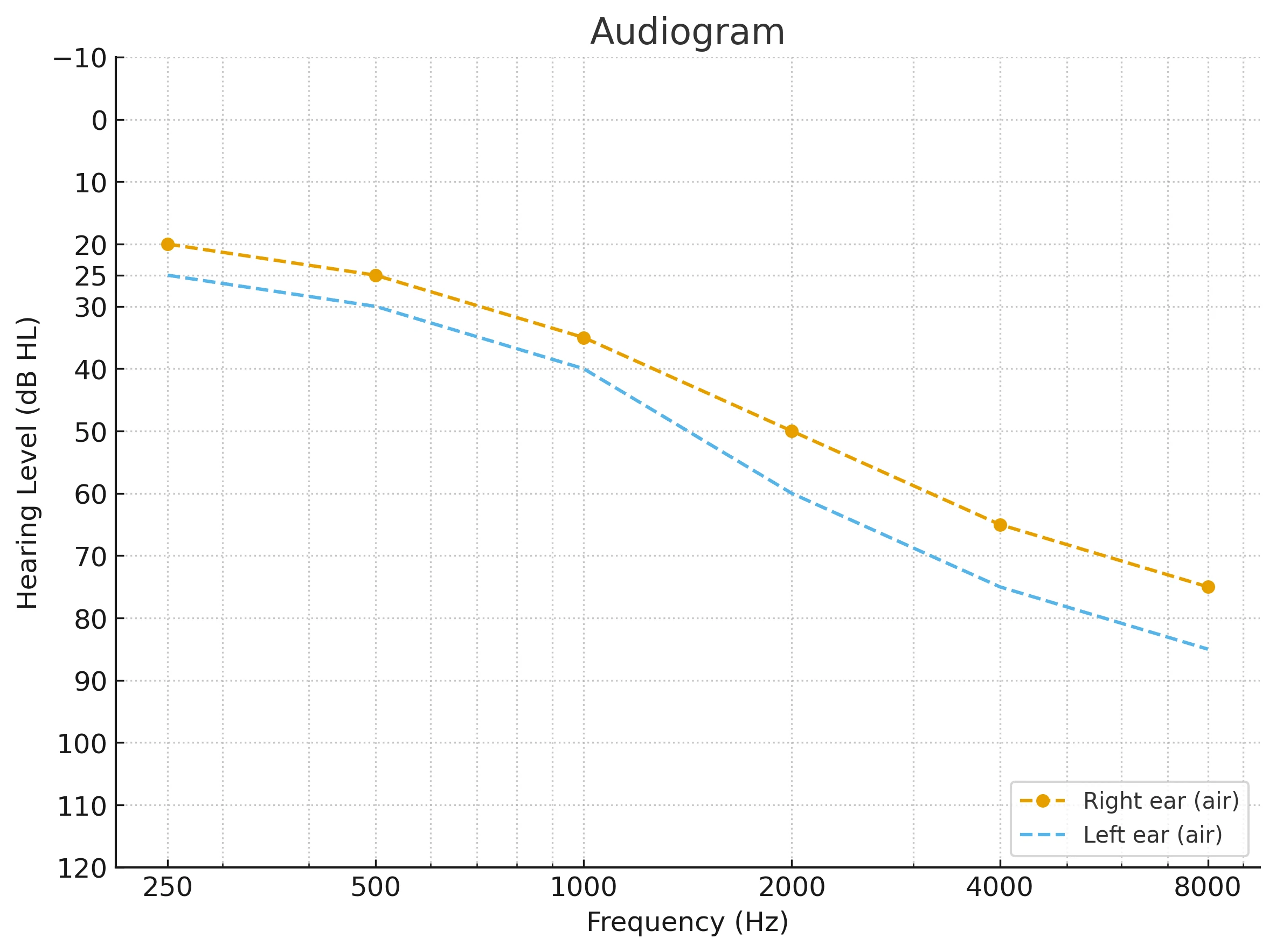
Hearing Loss
Causes
- Ageing (presbycusis), - Noise exposure (work, tools, music), - ear infections, eardrum issues. - Medications (some chemotherapy/antibiotics) - Genetic factors, - Autoimmune or Ménière’s disease. - Injuries or rare growths - Eareax blockageSymptoms
- Turning up TV/phone volume - Asking for repeats often - Difficulty following speech in noise. - Voices sound muffled or unclear - Conversation is energy draining - Social isolation (you avoid group chats.) - Tinnitus (ringing/buzzing) - Sense of ear “blockage.”** If you realise a sudden loss, one-sided loss/tinnitus, ear pain/discharge, spinning dizziness—seek urgent care.Treatment & support
- Conductive: wax removal, medical treatment for infection, referral to ENT specialist. - Sensorineural: modern hearing aids (fit and verified with real-ear measures), assistive listening devices ; cochlear implant referral for severe-profound loss. - Protection & prevention: custom earplugs, safe listening habits, medication review. - Aftercare: regular reviews, cleaning/tuning, hearing checks, and prompt referral to ENT when needed.
Tinnitus
Causes
- Ear conditions: impacted wax, otitis media/externa, otosclerosis, Menière’s disease - Noise exposure: acute impulse noise(gun shooting) - Chronic occupational/recreational noise - Age related hearing loss - Sudden sensorineural hearing loss - Medications/ototoxins - Temporomandibular joint problems - Vascular or neurologic problems - Psychological factors: stress, anxiety, depressionSymptoms
- Perceived sound without an external source: ringing, buzzing, hissing, roaring, clicking - Feels like there is a sound "in the head” - Quality: continuous or intermittent; pulsatile (in time with heartbeat) - Hearing difficulty, sound sensitivity (hyperacusis) - Ear fullness - Dizziness/vertigo - Sleep disturbance - Reduced concentration - Emotional distress ** If you experience pulsatile tinnitus, facial weakness, severe vertigo with tinnitus, seek urgent care.Treatment & support
- Education : Reducing distress/impact - Address reversible causes: earwax, ear infections, review medication - Hearing devices: hearing aids with tinnitus sound generator - Sound therapy, such as bedside sound generators, customised noise via apps - Psychological therapies referral - Tinnitus counselling programs - Lifestyle: stress reduction, limit stimulants - Team approach with dctor and ENT specialist
Wax blockage
Causes
- Wax unable to come out naturally(bendy/narrow canal) - Excessive exposure to dust - Use of cotton buds/Q-tips, bobby pins pushing wax deeper - Exostoses/osteomas - Skin conditions: eczema, psoriasis, dermatitis - Ear infections or inflammation - Use of in-ear devices for long hoursSymptoms
- Blocked or full sensation - Reduced hearing (conductive) - Tinnitus (ringing/buzzing), - Earache, itchiness, discomfort in the ear - Dizziness/light imbalance (less common) - Visible wax at canal or hearing aidsTreatment & support
- Microsuction service offers a safe and quick clean - Manual removal with curettes or forceps - Use softening drops periodically and before hearing appointments - Periodic ear checks (e.g., every 6–12 months) for wax blockage - Customised ear plugs/protection in dusty areas
loud sound exposure
Causes
- Occupational noise: construction, farming, factories, mining, music, military - Recreational noise: concerts, clubs, loud music, motor sports, shooting - Impulse blasts: nail guns, hammering, fireworks, firearms - Cumulative daily exposure above safe limits (e.g., ~85 dB A-weighted over 8 hrs) - Frequent short bursts at very high levels - Poor fit or incorrect use of hearing protectionSymptoms
- Muffled hearing - Blocked sensation after noise - Tinnitus, often louder in quiet - Difficulty understanding speech in background noiseTreatment & Support
- Regular hearing assessment to monitor your hearing changes - Wear proper ear protection for noisy situations - Protect your ears with customised ear plugs - Seek funding for hearing device through Work Compensation(if applicable)
Let's have a chat!
Do you have any questions on your hearing? Contact us and we can help you.